Artificial Intelligence (AI) has rapidly transitioned from a technical experiment to the foundational architecture of modern enterprises. From deploying Large Language Models (LLMs) to automating core operational workflows, organizations are scaling AI at unprecedented speeds. However, this unchecked velocity introduces massive risks, including algorithmic bias, data privacy breaches, opaque black-box decisions, and regulatory non-compliance.
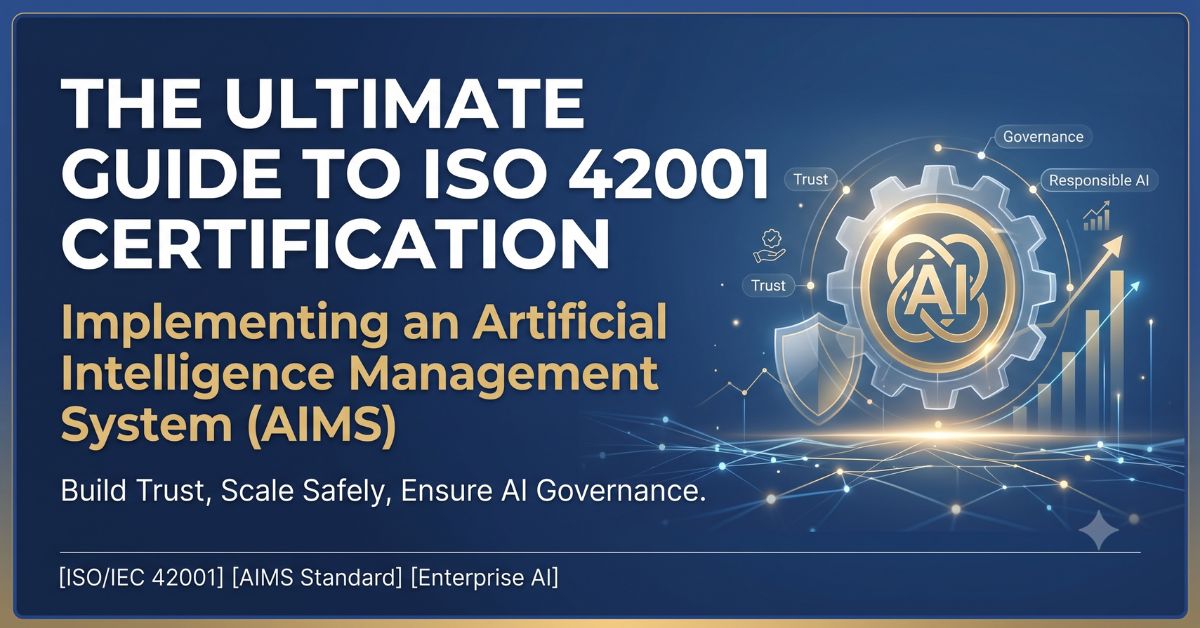
To navigate this complex landscape, organizations are turning to a unified global standard: ISO 42001 certification. As the world’s first international standard for an Artificial Intelligence Management System (AIMS), ISO/IEC 42001:2023 provides an actionable, process-driven architecture to responsibly design, deploy, and monitor AI technologies.
What is ISO 42001?
ISO 42001 is an international standard that specifies the requirements for establishing, implementing, maintaining, and continually improving an Artificial Intelligence Management System (AIMS) within an organization. It balances rapid technological innovation with systematic risk mitigation and ethical accountability.
What is ISO 42001 Certification?
Released jointly by the International Organization for Standardization (ISO) and the International Electrotechnical Commission (IEC), the AIMS standard acts as a comprehensive governance blueprint. Much like ISO 27001 structured information security and ISO 9001 structured quality management, ISO 42001 brings precise operational discipline to the lifecycle of AI systems.
The core objective of an ISO 42001 certification is to ensure that your organization doesn’t just implement AI for efficiency, but builds a sustainable model of responsible AI implementation. It provides structural guardrails tailored to the unpredictable, non-deterministic nature of machine learning algorithms and deep-learning neural networks.
The Structural Pillars of an Artificial Intelligence Management System (AIMS)
The standard follows the High-Level Structure (HLS) common to modern ISO standards, ensuring seamless integration with existing management systems like ISO 27001 (Data Security) and ISO 27701 (Privacy). The mandatory framework is built upon several critical domains:
| AIMS Core Domain | Requirements & Structural Focus | Expected Enterprise Outcome |
| AI Policy & Objectives | Alignment of AI strategies with executive leadership objectives and organizational values. | Strategic governance oversight. |
| Risk & Impact Assessments | Systematic mapping of technical flaws, social bias, and data exposure risks. | Proactive, preemptive threat reduction. |
| Data & System Governance | Traceability, complete data lineage, and rigorous validation of training datasets. | High algorithmic data integrity. |
| Operational Control | Establishing standard procedures for continuous monitoring, logging, and model updates. | Minimized drift and model degradation. |
Key Benefits of Securing ISO 42001 Certification
Investing in ISO 42001 compliance is not merely a legal or box-ticking exercise; it offers powerful, compounding strategic advantages for enterprises looking to scale technology safely:
- Unlocking Enterprise Trust: Demonstrating independent validation of your AI models radically shortens B2B sales cycles and boosts market confidence.
- Regulatory Readiness: The standard maps naturally to major global frameworks like the European Union AI Act (EU AI Act) and domestic executive guidelines on secure AI development.
- Mitigated Algorithmic Liability: A structured AI governance framework provides legal and operational safety nets, minimizing exposures to financial penalties or branding crises resulting from rogue output.
- Optimized Resource Allocation: Standardized data cleaning, model validation, and deployment practices significantly lower operational overheads and engineering friction.
Step-by-Step Roadmap to ISO 42001 Compliance
Achieving successful implementation requires a coordinated approach across technology, engineering, legal, and operational lines:
- Gap Analysis & Scope Definition: Determine which specific internal applications, LLM implementations, or vendor software fall within your AIMS boundary.
- AI Risk Assessment & System Impact Evaluation: Conduct detailed investigations into data sourcing, output vulnerabilities, hallucination rates, and societal fairness metrics.
- Documentation & Controls Mapping: Draft your core organizational AI policy and operationalize the specialized controls outlined in Annex A of the standard.
- Internal Audits & Pre-Assessment: Challenge the deployed workflows through comprehensive simulated reviews to verify real-world control efficacy.
- Official Certification Audit: Partner with an accredited external Registrar for a multi-stage audit process to secure your formal credential.
Frequently Asked Questions
Q1: Who needs an ISO 42001 certification?
Ans: Any public or private enterprise that develops, provisions, integrates, or utilizes systems driven by Artificial Intelligence—regardless of industry sector or size—benefits directly from implementing this standard.
Q2: How does ISO 42001 help with EU AI Act compliance?
Ans: It provides a harmonized process architecture that acts as a blueprint to systematically fulfill high-risk AI system compliance demands, structural transparency obligations, and rigorous risk assessments mandated by global laws.
Q3: Can ISO 42001 be integrated with ISO 27001?
Ans: Yes. Because it leverages the unified High-Level Structure (HLS), organizations can map data protection elements and IT infrastructure management controls directly to their existing information security management frameworks.
Conclusion: Lead the Future with Responsible AI
As market engines evolve, trust and operational clarity remain the primary differentiators. Achieving an accredited ISO 42001 certification demonstrates a profound commitment to sustainable, high-performing innovation. Secure your operations, clear regulatory hurdles, and scale your technology with complete confidence by embedding the world’s premier AI governance framework into your core architecture today.